By Kathy Landis
All things are part of a strand in an interwoven web. Each part of a web is important in holding up the whole. In an organization, the board may not be visible as they are not on site daily. Even though staff are on site, some play roles where they aren’t obvious to all. Thank you to each board member and staff – those mentioned here for their outstanding contribution, but also those that have only been at WW for one or part of a summer. Whoever you are, Wilderness Wind is the strength and connections of all of us. Also included in this blog are folks who have really been “behind the scenes” – those who have participated in and supported Wilderness Wind in remarkable ways but whose contributions were definitely not seen.
Board Members: (listed in the order they have been on the board)
 Virgil Brenneman: As one of the founding board member and a passionate camper, Virgil saw much potential for Wilderness Wind. He was instrumental in developing a connection with Mennonite Disabilities Committee (now Goldenrod) in Goshen, IN. It was due to Virgil’s efforts and connections that the tradition of MDC canoe trips and Lakeside retreatants flowed for over 15 year.
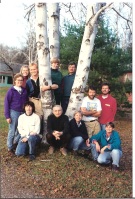
Mary Sutter: As a stable presence on the board for many years, Mary made wilderness experiences more accessible for woman. In addition to bringing up many groups, Mary enjoyed lingering at camp and helping with the many things needing done in the early years of Wilderness Wind. (In photo above).
Michael Schrock: As an architect, Mike brought his passion for buildings to Wilderness Wind. He not only created them (the Lakeside bathhouse), he also applied his energy to fundraising for them. Mike’s mischievous twinkle and his laughter also offered much light to board meetings. (In photo above).
 All those on the most recent board photo: What a group! I could thank Beth for being a marketing committee all to herself, John for dealing with those 1099’s, Glenn for helping with every building project since he joined the board, Marshall for his relentless participation and enthusiasm for the Paddle-a-thon, Steve for his fine leadership and listening abilities and… well really I could thank each of the current board members. They are a dynamic and highly invested group. It has been an honor working with you! Few Executive Directors are so fortunate.
Staff: (also listed in the order they were on staff)
 Cheryl Mast: Cheryl has connections to Wilderness Wind that date back to the late 1980’s. She led canoe trips, worked as the Camp Manager and continues to volunteer. As a staff, her propensity toward detail and organization set Wilderness Wind on a strong foundation. Her laughter, story telling and ability to capture the natural world thorough photography continue to be gifts to Wilderness Wind.

Penny Yarman: Penny worked at camp back in the day when everyone filled every position. For numerous years, Penny was able to manage maintenance tasks on the buildings, drive campers to entry points, grocery shop and make meals, pack trip food, service vehicles, clean, help in the office and envision much needed changes. Invaluable! Her passion for the northwoods and exploring also set the stage for the future paddle-a-thon, when she and two others went on a long day trip to see the effects of the 1999 wind storm.
Heather and Jason Potsander: Unfortunately, I don’t have a good photo of these two. Heather and Jason worked long hours editing the first promotional video for Wilderness Wind. It has been used often as we talk to individuals and congregations. In addition, Heather in particular volunteered many years as the coordinator for the Mennonite Disabilities trips. She managed paperwork, clothing and personal items, medical and transportation logistics. We are grateful for the abundance of details they have brought together in both of these areas of interest.
 Anthony Seigrist, Peter Janzen, Nathan Stayrock Hobbs: Catching the vision of the 1999 day trip, these enthusiastic staff created their own day trip event to see how far they could paddle. The energy bar tradition began…with a complete experiment! Their enthusiasm for the day trip concept kept the energy going to become what is today, the Paddle-a-thon.
 Marolyn Heatwole: Marilyn was the camp cook during one of the summers we were busy with lots of campers. She loved cooking, and many of us can remember wonderful meals that summer. She was rather busy all summer, and she thus noted the need for a kitchen manual. During the off-season, she put together the kitchen’s first manual which we continue to use extensively. Not only does it include recipes, it also includes orientation day meals, what to make for the paddle-a-thon, and how to organize the tight kitchen for best space use and where to purchase what food etc.!
 Mary Ruth Kamp: Working as Trip leader, then Assistant Director for many years and continuing on as Publications Editor (currently), Mary Ruth positively affected many aspects of camp with her gentle, caring nature and her love of communicating with staff and the broader community. Among other things, I personally have enjoyed her deep understanding of the need for beauty and visual wholeness in our lives.
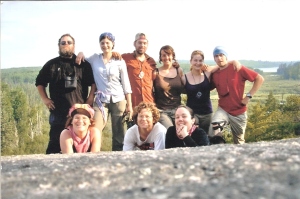 Staff (and volunteers for that matter) of 2007: Each of us has challenging days, some of us have challenging years… or summers. As the complexity and size of Wilderness Wind shifted, the stress of building projects existed, administrative and organizational systems morphing, all within the context of the typical challenges of human diversity and communication, I know I was at my worst as a leader this summer. This group not only offered grace within that, but many have continued to be involved in Wilderness Wind. I and WW are grateful.
 Dave Leonard: Dave and buildings seem to go together. So do Dave and plays on words and good conversation. Dave has been instrumental in figuring out the hows and wherefores of many building projects over the last six years. He has brought leadership to most of the building project in those years, and those he hasn’t been, he has participated in it is some way shape or form. His ability to reuse from previous salvaging efforts and be creative with it have also been helpful at Wilderness Wind.
 The staff of 2009: Each staff in their own area paved the way for a new experience for future campers and staff.
Liz Rempel worked as camp cook. Liz’s gracious spirit welcomed many new campers into the kitchen. During her time as cook, Liz expanded the kitchen manual, created a smooth plan for caring for all the first timers from Big City Mountaineer, and stepped out of the kitchen to assist with a large painting project.
Anna Weaverdyck worked as a base-camp staff with a strong interest in developing the gardens. Anna expanded the gardens and created a helpful file for future gardeners. Garden’s aside, with all the other things that Anna cared for that summer, it became clear that as camp changed further a full-time base-camp person was needed to grease all the various wheels.
Susan Mershon: Susan led trips both in 2009 and 2010. When she wasn’t on the water in 2009, she created a very useful trail map. Susan’s watercolor expressions also became cards for invitations for Wilderness Wind’s Ely area gatherings.
Greg Thiessen also led trips. His enthusiasm for the paddle-a-thon has spread beyond 2009… and to his siblings as well. His creative ideas around camp also lead to the above photo!
Matt Thomas worked as the maintenance director during a summer where we didn’t have a large building project. Matt caught us up on some crucial lingering building needs, but he also was the nuts and bolts behind the conestoga wagon hoop house, the chicken house and the recycling centers at both Pine Ridge and Lakeside.
 The Current Crew: Within the 26 years of this organization, there has never been this many return and experienced people on staff. The skill set of this group is phenomenal and life-giving. One by one, without knowing of the others, they decided to be on staff this summer. I marveled as I saw such an amazing group come together. For me, it felt like the hand of God leading each and all. As the next generation steps forward, it has been a blessing to work with them and see their commitment and love of Wilderness Wind play out.
Other miscellaneous people to thank!
 Jeanne and Gordon Houser: As part of my church small group as well as neighbors in the next block, Jeanne and Gordon have carried Wilderness Wind in prayer, encouragement, and good questions. Their gifts to WW are also visibly concrete as they have offered me a room in their home for my “off season” office. The space offered as well as the companionship have provided a gift immeasurable.
 Yolanda Kauffman and Eric and Noah Massaneri: Adventurer’s on several trips into the Boundary Waters (including one when Noah was three), these friends have joined Miles and I in our love of this landscape and organization. They have supported, listened, observed, asked some of the hardest questions, been remarkably patient and deeply know the importance of Spirit, people and Earth.
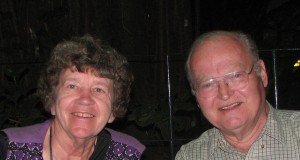 Mom and Dad: Certainly our parents shape and support us in ways we know and don’t know. I am grateful to my parents for many things, but within the context of Wilderness Wind, applicable things I have learned from them could include a love of change, seeing potential, an appreciation for numbers, and compassion, to name a few. They both hold a balance of Spirit and Earth consciousness and commitment but for each the focus and balance is different. They have supported me and Wilderness Wind in numerous ways.
 Lastly, to my dear spouse Miles, given that he viscerally understands the power of the wilderness in shaping our lives and our faith, offered the grace and patience that allowed me to embrace the task of leadership as passionately and as long as I have.
Thank you for all the ways each of you have been a part of the web of Wilderness Wind.




 Wilderness Wind